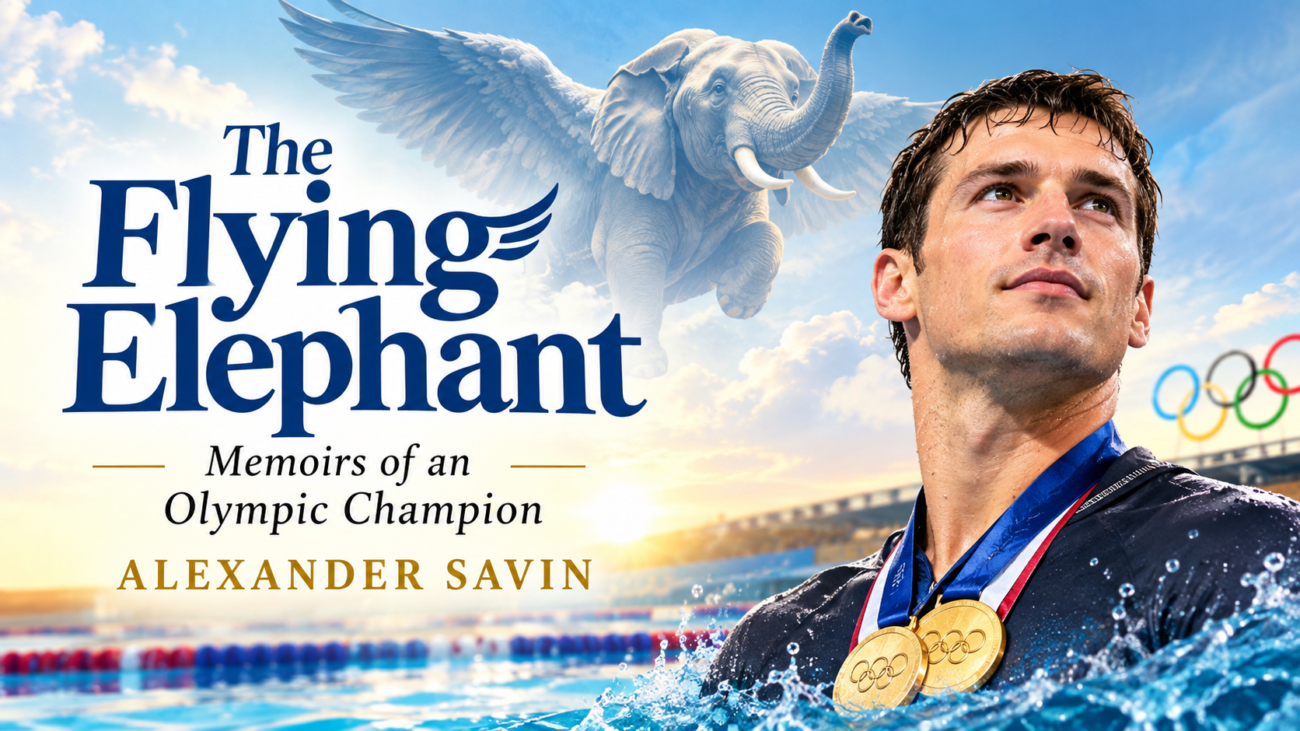
Who Was Alexander Savin?
Alexander Savin is remembered as one of the important figures associated with Soviet volleyball and its highly successful international era. His career represents a period when volleyball was becoming increasingly competitive on the world stage. Savin’s name is particularly connected with Olympic-level competition, where discipline, athletic ability, and tactical understanding were essential.
The phrase “the flying elephant” gives an unusual and memorable character to the story of an athlete. At first glance, an elephant does not seem like an obvious symbol for a volleyball player. The sport demands speed, jumping ability, coordination, and quick reactions. The contrast makes the expression especially interesting when connected with an elite athlete.
Savin’s memoirs offer an opportunity to look beyond medals and statistics. A sports career is rarely built only on natural talent. It usually involves years of training, difficult competitions, team relationships, travel, pressure, and personal sacrifices. These elements help make an Olympic champion’s story valuable even to readers who are not dedicated volleyball fans.
The Meaning Behind The Flying Elephant
The title “The Flying Elephant” immediately creates curiosity. An elephant is commonly associated with strength, size, and endurance, while flying suggests movement, freedom, and remarkable athletic performance. Together, the two images create a memorable description of an athlete who combined physical presence with the ability to move and compete at an extraordinary level.
In volleyball, jumping is one of the most important parts of the game. Players must rise quickly to attack, block, and respond to opponents. A player who appears physically powerful can still surprise spectators with agility and timing. That contrast can help explain why an unusual nickname or phrase can stay connected to an athlete’s story.
Memoirs also give titles a deeper meaning. A phrase that sounds humorous or dramatic from the outside may represent something personal to the athlete. It can describe how others viewed him, how he viewed himself, or how his sporting journey developed over time.
Alexander Savin and the World of Soviet Volleyball
Soviet volleyball developed into a major international force during the twentieth century. The national teams competed against strong opponents from Europe and other parts of the world, creating a highly competitive environment for players.
Being part of that system required more than individual ability. Players had to adapt to demanding training routines and work within carefully organized teams. Volleyball is particularly dependent on coordination because every rally involves several players performing different roles within seconds.
For an athlete such as Savin, international competition would have provided experiences that domestic matches could not reproduce. Playing against different styles and tactical systems forced players to make quick adjustments. These experiences could shape an athlete’s understanding of the sport and influence how he approached major tournaments.
The Road to Olympic Competition
Reaching the Olympic level is one of the biggest achievements available to an athlete. The Olympic Games bring together competitors who have already passed through demanding qualification and selection processes. For team sports, the challenge is even greater because individual success depends on collective performance.
Savin’s Olympic connection places his career within one of the most significant chapters of international volleyball. The pressure surrounding an Olympic tournament can be very different from that of an ordinary match. Athletes know that the event attracts global attention and that opportunities to compete at that level are limited.
Preparation therefore becomes an essential part of the story. Physical training is only one component. Players must also develop concentration, tactical awareness, communication, and the ability to recover from mistakes. A single error does not end a match, but the ability to respond to that error can influence the entire contest.
What Makes an Athlete’s Memoir Interesting?
Sports biographies often focus on achievements, but memoirs can offer something more personal. Instead of simply listing tournaments and medals, a memoir can explore how an athlete experienced those moments.
This difference matters because the public usually sees only the final performance. Spectators watch the match, celebrate a victory, or remember an important point. They do not see every training session that came before it. They may not know about the uncertainty, exhaustion, injuries, travel, or personal decisions that shaped the athlete’s career.
A memoir can therefore connect the public image of a champion with the person behind it. Alexander Savin’s story is interesting in this context because the sporting record provides one perspective, while a personal account can provide another.
The Pressure of Being an Olympic Champion
An Olympic champion carries a unique kind of sporting legacy. Winning at the Olympic level can become the achievement for which an athlete is remembered for decades. At the same time, that achievement can create expectations that are difficult to escape.
Athletes competing at the highest level must learn to manage pressure before, during, and after major events. The attention can be intense, particularly when a team represents an entire sporting system or country.
For many champions, life after competition becomes another chapter of the story. Retirement changes daily routines and removes the structure that once organized almost every part of life. Looking back through memoirs can reveal how athletes understood those changes.
Volleyball Beyond the Scoreboard
One of the most interesting aspects of an Olympic sports memoir is the opportunity to understand what happens outside the scoreboard. Volleyball may appear simple when watched casually, but high-level competition involves detailed strategy.
Players must understand positioning, timing, blocking patterns, attacking options, and defensive movement. A successful team does not depend only on the strongest hitter. Every player contributes to the system.
This makes teamwork one of the central themes of volleyball. Individual talent can create spectacular moments, but championships usually require players to trust one another. A memoir can reveal how those relationships developed and how teammates influenced an athlete’s career.
Training, Discipline, and Sacrifice
Elite sport demands consistency. A player cannot prepare for an Olympic competition in a few weeks. Years of training are normally required to develop the physical and technical qualities necessary for international competition.
Training also involves repetition. The same movements may be practiced countless times until they become automatic. Jumping, attacking, blocking, serving, and defensive actions require precise coordination.
Behind those repetitions are sacrifices. Athletes may spend significant periods away from family and friends because of training camps, tournaments, and international travel. They must also organize their lives around recovery, competition schedules, and physical preparation.
These less visible parts of athletic life are often what make memoirs particularly valuable. They show that a celebrated career is built from ordinary days of work as much as extraordinary days of competition.
The Human Side of Alexander Savin’s Story
The phrase “Olympic champion” can make an athlete seem almost larger than life. It places the person alongside medals, records, photographs, and historic sporting moments. A memoir can change that perspective by bringing attention back to the individual.
Personal memories can show how athletes responded to success and disappointment. They can also reveal the importance of coaches, teammates, family members, and other people who influenced their careers.
That human side is important because sporting achievements never happen in complete isolation. Even an exceptional player develops within a larger environment. Coaching, competition, teamwork, and opportunity all contribute to an athlete’s development.
Why The Story Still Matters
The appeal of a sports memoir does not disappear when an athlete’s competitive career ends. In many cases, the passage of time makes such stories more interesting because readers can view the sporting era from a historical perspective.
Savin’s connection with Olympic volleyball provides a window into an important period of the sport. Volleyball has continued to evolve, with changes in tactics, training, equipment, athletic preparation, and international competition.
Looking back can therefore help readers understand how the sport developed. Older generations of players competed under different circumstances, yet many of the fundamental qualities remain familiar: discipline, teamwork, concentration, resilience, and the desire to perform under pressure.
Lessons From an Olympic Career
There are several broader lessons that can be drawn from an Olympic athlete’s journey. The first is that success rarely comes from one moment of inspiration. It develops through consistent preparation.
The second lesson concerns teamwork. Volleyball demonstrates particularly clearly that individual ability works best when it supports a larger team structure. Players must understand their own responsibilities while remaining aware of everyone around them.
The third lesson is resilience. Competition inevitably includes mistakes and setbacks. Elite athletes must recover quickly and continue performing. That ability is useful far beyond sport.
Finally, an Olympic career demonstrates the importance of commitment. Reaching the highest level requires sustained effort over many years. Talent can provide an advantage, but long-term development depends heavily on discipline and persistence.
The Lasting Appeal of The Flying Elephant
“The Flying Elephant: Memoirs of an Olympic Champion Alexander Savin” stands out because its title combines strength, movement, personality, and sporting achievement. It suggests a story that is about more than volleyball results.
The Olympic connection gives the memoir historical importance, while the personal perspective makes the subject more accessible. Readers can approach the story as sports fans, followers of Olympic history, or simply people interested in the experiences of high-level athletes.
Ultimately, the value of a sports memoir comes from the journey behind the achievement. Medals provide a record of what happened, but personal memories can help explain what it felt like to live through those moments.
Alexander Savin’s sporting legacy is connected with a period when Soviet volleyball held an important place in international competition. “The Flying Elephant” offers a memorable way to explore that world and the person behind the Olympic champion label.
Frequently Asked Questions
Who is Alexander Savin?
Alexander Savin is associated with Soviet volleyball and international competition. He became known as an elite volleyball player and an Olympic-level athlete.
What is The Flying Elephant?
“The Flying Elephant” is the title associated with Alexander Savin’s memoirs. The unusual title creates a memorable image that connects physical strength with athletic movement.
Why are Olympic memoirs important?
Olympic memoirs provide a personal perspective on major sporting events. They can describe training, competition, teammates, pressure, travel, and experiences that are not visible from competition results alone.
What can readers learn from Alexander Savin’s story?
Readers can explore themes such as discipline, teamwork, preparation, resilience, and the challenges involved in reaching elite sporting competition.
Why is volleyball important to Savin’s story?
Volleyball forms the central sporting context of Savin’s career. His connection with international competition places his story within the development of high-level volleyball during the Soviet sporting era.
Why does the title The Flying Elephant attract attention?
The combination of “flying” and “elephant” creates an unexpected contrast. It suggests strength combined with movement and makes the memoir’s title distinctive and easy to remember.
Final Thoughts
The story behind “The Flying Elephant: Memoirs of an Olympic Champion Alexander Savin” is ultimately about the human journey behind elite sport. Olympic success may be represented by a medal or a result, but the road toward that achievement involves years of preparation, teamwork, pressure, competition, and personal sacrifice.
Savin’s connection with Soviet and Olympic volleyball gives readers a chance to look at a significant period in the sport’s history. More importantly, a memoir can move beyond statistics and allow readers to consider the experiences that shaped the athlete.
That is what makes sporting memories valuable. They preserve not only the results of competition but also the stories, emotions, challenges, and relationships behind them. For readers interested in volleyball and Olympic history, Alexander Savin’s story provides a distinctive perspective on what it means to compete at the highest level.
